
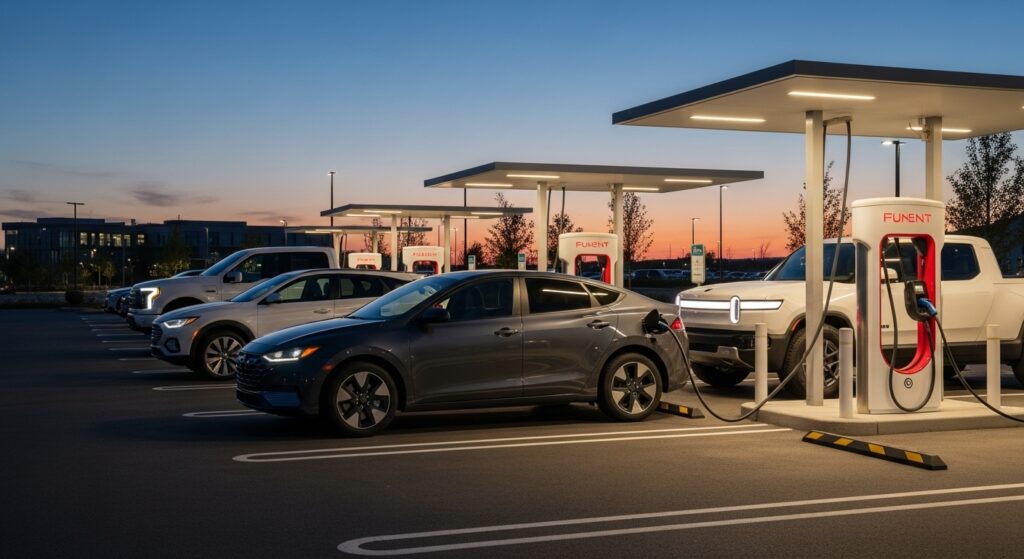
Your Ultimate Guide to Non-Tesla EV Charging
Owning an electric vehicle from a brand like Ford, Rivian, Hyundai, or Polestar offers an exhilarating driving experience. But it often comes with a nagging question that Tesla drivers rarely face: “Where can I find a reliable and compatible charger on the go?” This compatibility anxiety can add stress to any journey. The good news is that the world of non-Tesla EV charging is expanding and unifying faster than ever. With the right knowledge and tools, you can confidently power your EV anywhere.
This guide will demystify charging standards, show you how to find universal stations, explain the essential adapters you need, and even walk you through charging your non-Tesla vehicle at a Tesla Supercharger.
Understanding Non-Tesla Charging Standards: CCS, J1772, and CHAdeMO
Before you can plug in, you need to know your plug type. Think of it like smartphone chargers before USB-C became dominant; different brands had different connectors. In the non-Tesla EV world, there are three primary standards in North America.
- J1772: This is the universal standard for Level 1 (120-volt) and Level 2 (240-volt) AC charging. If you’re charging at home, work, or a public Level 2 station, your EV almost certainly uses this plug.
- Combined Charging System (CCS): This is the dominant standard for DC fast charging in North America and Europe. The CCS plug cleverly combines the J1772 connector with two large pins below it for high-speed direct current. Most new non-Tesla EVs use this for fast charging.
- CHAdeMO: This DC fast charging standard was pioneered by Japanese automakers. While it was popular on older models like the Nissan LEAF, most new EVs are being built with CCS ports instead. Stations are still available but are becoming less common.

Finding Compatible Chargers: Apps and Networks for Your EV
Your EV’s built-in navigation system is a great starting point, but dedicated apps provide a more comprehensive and real-time view of the charging landscape. These are your essential travel companions.
Find EV Charging Stations Near Me: Tesla Live Availability & Prices- PlugShare: Widely considered the bible of EV charging, PlugShare has a user-generated map of virtually every public charger. Its most powerful feature is the ability to filter by plug type (J1772, CCS, etc.) and see recent user check-ins and comments on station status.
- Network-Specific Apps (Electrify America, EVgo, ChargePoint): Each major charging network has its own app. You’ll need these to start sessions, process payments, and check the real-time availability of chargers within their network.
- A Better Route Planner (ABRP): For road trips, ABRP is indispensable. You input your specific EV model, starting state of charge, and destination, and it maps out the optimal route, including necessary charging stops and estimated charging times.
Essential Adapters for Non-Tesla EVs: NACS (Tesla Supercharger) and More
Adapters are the keys that unlock more charging opportunities for your vehicle. As the industry shifts towards Tesla’s plug design, now called the North American Charging Standard (NACS), one adapter has become particularly important.
The NACS to CCS Adapter
With Tesla opening its Supercharger network and many automakers committing to adopting the NACS port, a NACS to CCS adapter is becoming a must-have accessory. This allows EVs with a CCS port to connect to Tesla’s fast chargers, dramatically expanding your charging options. It’s crucial to purchase a high-quality, reputable adapter to ensure safety and charging speed.

Charging Your Non-Tesla at Tesla Stations: What You Need to Know
For years, Tesla’s Supercharger network was a walled garden. That’s changing. Tesla is retrofitting stations with a technology called the “Magic Dock,” which contains a built-in CCS adapter, making it one of the most accessible networks for tesla charging stations for non tesla drivers.
Here’s how it works:
- Download the Tesla App: You’ll need the official Tesla app to find and activate these chargers. Create an account and add your payment information.
- Find a Magic Dock Station: In the app, select “Charge Your Non-Tesla.” The map will display Supercharger locations equipped with the Magic Dock.
- Connect and Charge: Select your stall in the app and tap “Start Charging.” The Magic Dock will unlock, allowing you to pull out the integrated CCS adapter and plug it into your vehicle.
Understanding the differences between the various different Tesla charger types can help you better plan your charging strategy, whether at a Supercharger or a slower Destination Charger.
Tesla Charger Types Comparison: Supercharger vs. Wall ConnectorThe Best Universal Charging Networks for All EVs
While Tesla’s network is opening up, several robust and reliable universal networks are dedicated to serving all EV brands. These should be the primary targets on your road trips.
- Electrify America: Known for its high-speed (150kW to 350kW) chargers, Electrify America is often found at major retailers like Walmart and Target, making it convenient for long-distance travel along interstate highways.
- EVgo: With a strong presence in urban areas and retail locations, EVgo offers a mix of Level 2 and DC fast chargers. They also partner with automakers and rideshare companies.
- ChargePoint: ChargePoint operates one of the largest networks, though many of its stations are independently owned. They offer a great mix of Level 2 and DC fast charging, making them a common sight at workplaces, apartments, and public parking lots.
Planning Long-Distance Trips with a Non-Tesla EV
Road-tripping in a non-Tesla EV requires a bit of foresight but is entirely achievable. Your goal is to minimize downtime and eliminate range anxiety.
First, use an app like ABRP to create a preliminary route. Cross-reference its suggestions with PlugShare to read recent reviews of the recommended charging stations. Always have a Plan B and even a Plan C charger in mind in case your primary choice is occupied or out of service. As part of your planning, it’s always wise to have a complete picture of all options, including finding reliable EV charging stations near you that might not be on your immediate route but could serve as a backup.
Tips for a Hassle-Free Non-Tesla Charging Experience
- Know Your Car’s Max Speed: Don’t pay for a 350kW charger if your car can only accept 150kW. Match the station to your vehicle’s capabilities.
- Charge to 80%: For most EVs, charging from 80% to 100% on a DC fast charger is significantly slower. To save time and be courteous to other drivers, it’s often best to unplug at 80% and continue your journey.
- Precondition Your Battery: In colder weather, navigate to the fast charger using your car’s built-in navigation. Many EVs will automatically warm the battery on the way, allowing for much faster charging speeds upon arrival.
- Practice Good Etiquette: Only park in a charging spot if you are actively charging. Once you’re finished, move your vehicle so others can use the station.
Conclusion: Powering Every EV Journey
The landscape of non-Tesla EV charging is rapidly evolving for the better. What was once a fragmented system is now becoming more unified, thanks to network expansion and the adoption of universal adapters. By understanding your vehicle’s charging standard, utilizing the right apps, and carrying an essential adapter, you can eliminate compatibility anxiety. The open road is truly open for every electric vehicle, giving you the freedom to explore with confidence, no matter what brand you drive.