
Top Driving Schools Near You
When searching for a "driving school near me," explore our curated list of the best local schools in Mobile, based on student reviews, DMV-alignment, and our expert criteria.
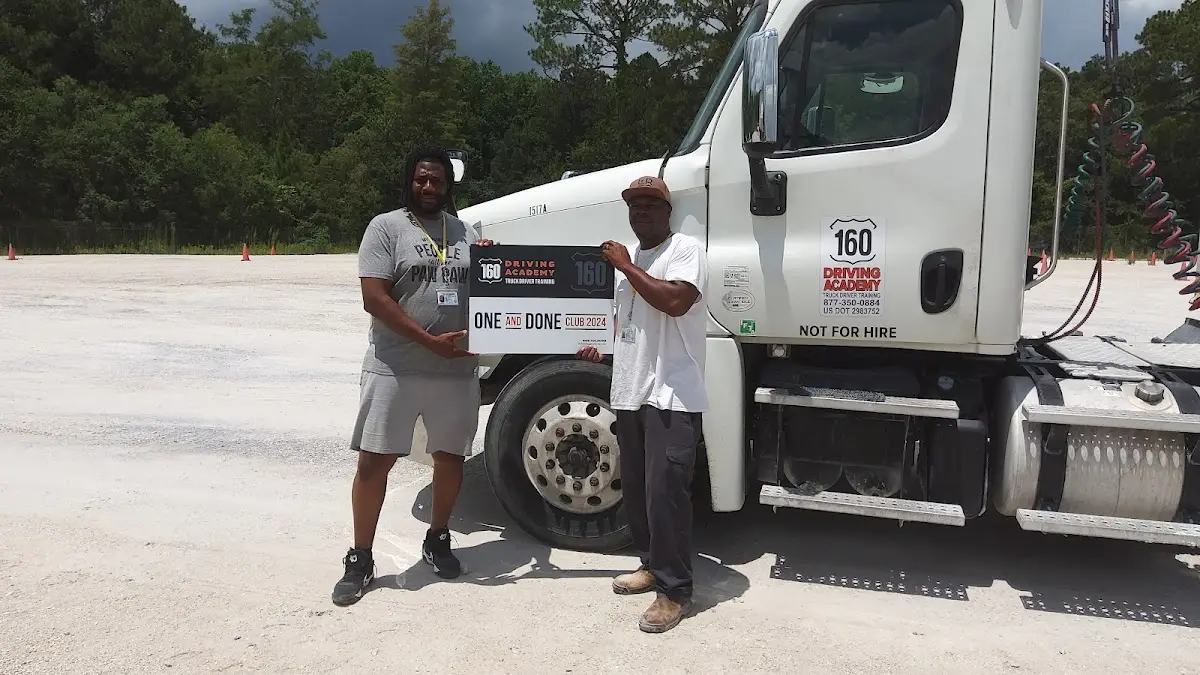
160 Driving Academy of Mobile
5300 Halls Mill Rd Suite D, Mobile, AL 36619, USA
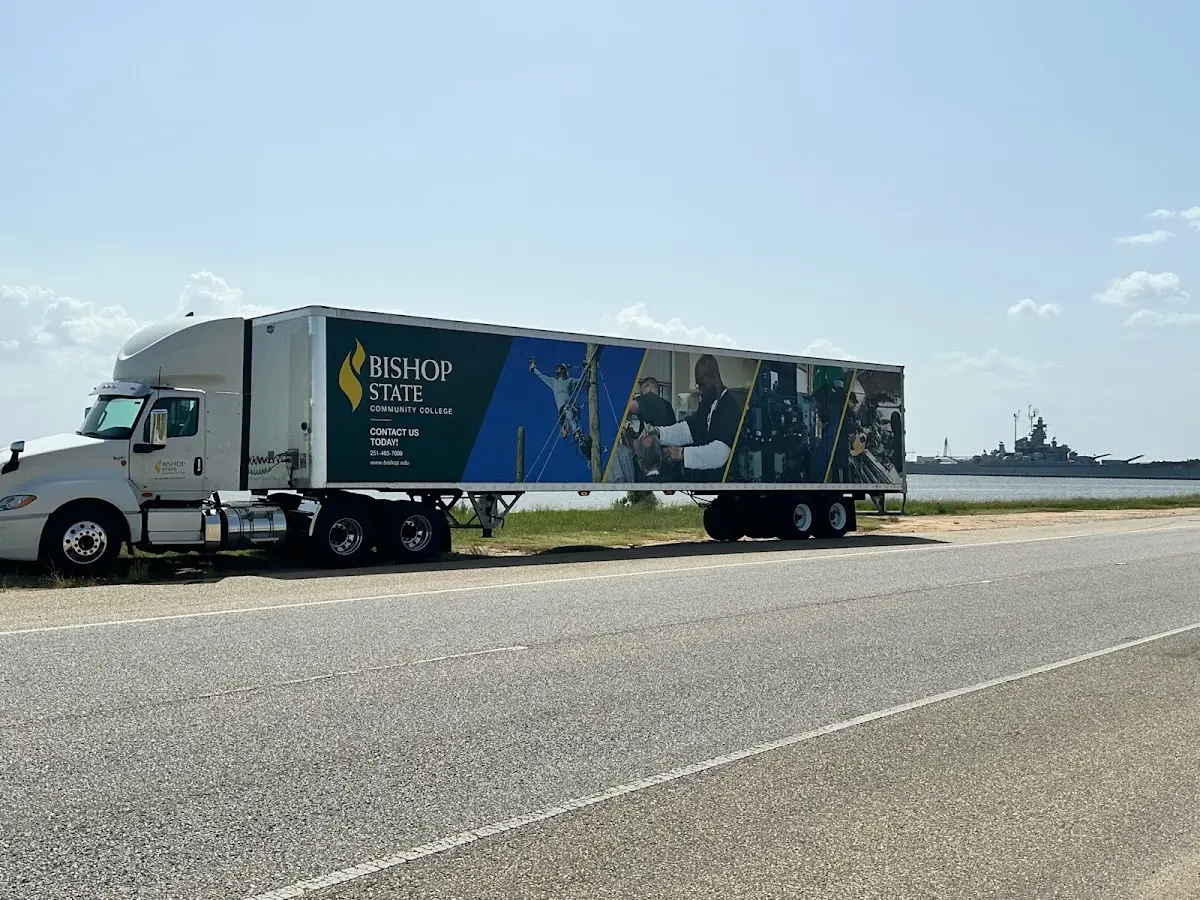
Bishop State Truck Driving School
4551 Halls Mill Rd, Mobile, AL 36693, USA

Mobile County Training School
800 Whitley St, Mobile, AL 36610, USA
Driver Education Institute
574 Azalea Rd Suite 109, Mobile, AL 36609, USA
Your Complete Guide to Getting a Driver's License in Mobile
Author: Vladimir Rodriguez
Welcome to Mobile — a city of busy coastal routes, interstate connections, and neighborhood streets where finding the right driving school near me makes all the difference. Whether you’re a teen getting your first license, a parent supporting a new teen driver, an adult getting a license for the first time, or pursuing cdl training in Mobile Alabama or attending a truck driving school Mobile AL, this guide is written to help you move through the process confidently and safely.
This article will walk you through every step of Alabama’s licensing system, explain why a structured learning path matters for safety, and show you how to pick the best driving school in Mobile — be it traditional driver's ed, a defensive driving course Mobile AL, or full CDL training. I’ll explain the rules, the documents you’ll need, the exam formats, realistic timelines, and the safety skills that matter on Mobile’s roads.
Why a structured learning path matters for safety
- Driving is a complex task. Structured learning — combining classroom knowledge, professional behind-the-wheel instruction, and supervised practice — builds habits that reduce crashes.
- Professional instruction focuses on proven methods: scanning, hazard recognition, space management, speed judgment, and defensive habits specific to local conditions (coastal weather, busy downtown streets, and highway merging near I-10 and I-65).
- For teens and new adult drivers, following a step-by-step program reduces risk during the first critical years of independent driving, when inexperience is the leading factor in collisions.
Natural keyword note: Throughout this guide you’ll see helpful coverage of driving school options, cdl training in Mobile Alabama, truck driving school Mobile AL, and defensive driving course Mobile AL — terms people search when choosing training in our area.
---
The Alabama Licensing Process: A Detailed Step-by-Step Journey
Below is a clear, step-by-step breakdown of the most common licensing pathways in Alabama, tailored for teens, parents, and adults. The goal is to make what can seem complex into a practical sequence you can follow.
Step 1: The Learner's Permit
At the start of the licensing journey is the learner’s permit (sometimes called an instructional permit). This permit allows supervised driving and is required before progressing to solo driving privileges for most teens.
Requirements for 15 vs 16-year-olds
- Age 15: Many teens begin with an instructional permit at age 15. This permit allows driving only when accompanied by a licensed driver who meets the state minimum age requirement to supervise (commonly 21 or older) or an authorized driving instructor.
- Age 16: At 16, after meeting certain requirements (time on permit, driver education, and supervised practice), teens become eligible for intermediate or restricted licenses that permit limited unsupervised driving. The exact timing depends on completion of mandatory instruction and supervised hours.
ALL required documents (you will need to bring ORIGINAL or certified copies — photocopies are usually not accepted)
To obtain a learner’s permit, you’ll typically need:
- Proof of identity: certified birth certificate or U.S. passport.
- Social Security Number: Social Security card or a document that shows your SSN.
- Proof of Alabama residency: two documents such as utility bill, bank statement, or parent/guardian’s Alabama driver license showing the same address.
- Proof of school enrollment or graduation status if under 19 (e.g., school transcript, diploma, or school enrollment form).
- Parental/guardian consent if under 19 (signed consent form on-site or a notarized document when required).
- Proof of legal presence if not a U.S. citizen (immigration documents).
- Driver education completion certificate, if applicable (many teens must provide proof of having completed an approved driver education program before advancing).
- Acceptable photo ID documents as listed by the licensing office.
Tip: Requirements and acceptable documents are tracked and published by the Alabama Law Enforcement Agency (ALEA). Always check ALEA’s official list before your visit to avoid delays.
Written knowledge test details (question count, passing score) + study tips using the official manual
- Test format: The written knowledge test is typically multiple choice, covering road signs, rules of the road, and safe driving practices.
- Typical length and passing score: In Alabama the knowledge test often consists of around 30 questions with a common passing threshold of 80% (for example, 24 correct out of 30). (Because testing details can change over time, confirm the exact number and passing criteria on ALEA’s official website before testing.)
- Study tips:
- Use the official Alabama Driver’s Manual: read each chapter and re-read sections on signage, right-of-way, and teen-specific laws.
- Practice with online permit practice tests based on the Alabama manual; complete multiple full-length test simulations.
- Break study sessions into short, focused intervals: signage for one session, traffic laws for another, and safe-driving scenarios for a third.
- Practice identifying signs and signals while riding as a passenger in Mobile — scanning real local streets accelerates learning.
- If you’re taking driver education at a driving school, align your school’s lessons with the manual’s topics.
Step 2: Behind-the-Wheel Practice
Education without practice is incomplete. Alabama requires supervised behind-the-wheel experience before teens move to solo driving privileges.
Explain the state-mandated 30-hour requirement
- Alabama emphasizes practical driving experience. A commonly required benchmark for supervised practice is a minimum of 30 hours of behind-the-wheel driving practice, with a portion (often 10 hours) completed during nighttime conditions. This mixture of daytime and nighttime hours helps ensure experience across common driving environments.
- Note: Some driver education programs also include professional behind-the-wheel training hours (instructors provide portion of required hours). For teens, the combination of professional training and parental supervised practice provides the strongest foundation.
Checklist of skills (parking, 3-point turns, highway, city driving in Mobile)
Create a skills checklist to guide supervised practice sessions. Aim to be competent in each item before your road test.
Basic vehicle control and maneuvers
- Smooth starts and stops
- Steering control and lane centering
- Proper mirror use and head checks
- Parking: parallel, angle, and perpendicular
- Three-point turns and controlled backing (straight and reverse diagonal)
- Hill starts (if applicable)
Situational driving skills
- Intersections: right-of-way, controlled and uncontrolled
- Left turns across traffic, protected vs. unprotected turns
- Merging and lane changes on multi-lane roads and highways
- Highway driving: safe merging, maintaining speed, spacing, and lane discipline on I-10/I-65 corridors
- Defensive gap management: maintaining safe following distance and escape paths
Environmental and special conditions
- Night driving: low-beam and high-beam use, glare management
- Rain and wet pavement: braking and hydroplaning awareness (important in Mobile’s coastal weather)
- Coastal wind and visibility challenges experienced near the Port of Mobile and bay areas
- City driving: multi-lane turns, parking, pedestrian-heavy areas in downtown Mobile, dealing with bicyclists
Value of professional instruction vs parent-only practice
- Professional instructors teach standardized, evidence-based techniques and often have specific experience preparing students for the road test and for hazard recognition in local conditions.
- Parent-led practice is invaluable for building time and situational experience; parents should focus on reinforcing instructor-led habits rather than teaching conflicting techniques.
- A hybrid approach — a professional driving school for core lessons plus supervised parental practice for accumulated hours — typically delivers the best results: professional technique, supplemented by family practice under varied local conditions.
Step 3: The Road Test
The road (skills) test is the final step to demonstrate you can safely operate a vehicle independently.
How to schedule in/near Mobile
- Scheduling options: Most candidates schedule a road test through ALEA’s online portal, by phone, or via the local Driver License office. Mobile has driver license offices and third-party testing centers nearby. Book early — slots can fill, especially in summer and near school graduation periods.
- Bring documentation of completed supervised hours or driver education completion, if applicable — some offices require a certificate or signed log.
Vehicle requirements (insurance, registration, condition)
The vehicle you use for the test must be legal and safe:
- Valid registration and vehicle plates
- Proof of current insurance (owner or driver’s proof)
- Seat belts for the driver and examiner
- No warning lights (check engine, ABS, airbag) that indicate unsafe vehicle condition
- Good brakes, turn signals, horn, lights (headlights, tail lights, brake lights), and tires with safe tread
- Clean passenger compartment, unobstructed mirrors and windows
- Examiner will typically inspect the vehicle before the test; if the vehicle is unsafe, the test will be postponed.
What examiners evaluate (signaling, speed control, observation)
Examiners watch for safe, legal driving and consistent habits:
- Starting and stopping smoothly
- Proper use of signals and mirrors before maneuvers
- Speed management: observing posted speeds and adjusting for conditions
- Lane discipline: staying centered and making safe lane changes
- Intersections: safe approach, yielding, and scanning
- Observation: checking blind spots and scanning for hazards (pedestrians, cyclists)
- Space management: maintaining safe following distance and leaving room to maneuver
- Parking and low-speed maneuvers: controlled backing and parallel parking when required
- Decision-making: choosing safe gaps and handling moderately complex traffic situations
- Examiners score on a point or error-based system; some errors are automatic failures (dangerous maneuvers).
Step 4: Alabama's Graduated Driver License (GDL) Program
Alabama’s GDL system phases in driving privileges to reduce teen exposure to high-risk situations. Graduated licensing recognizes that newly licensed teens need restrictions and gradual exposure.
All restrictions for teen drivers (curfews, passenger limits)
Key teen restrictions commonly include:
- Curfew: Many intermediate license holders under 18 are restricted against unsupervised driving during late-night hours (for example, midnight to 4:00 a.m.). There are exceptions for work, school activities, or emergencies when properly documented.
- Passenger limits: New teen drivers often face limits on transporting multiple non-family passengers under 21; for example, a limit such as one non-family passenger for the first six months. Immediate family members are typically exempt.
- Electronic device restrictions: Texting and handheld phone use are prohibited for drivers under 18 in many jurisdictions — even hands-free use may be restricted while driving.
- Time-on-permit: Teens must hold a learner’s permit for a minimum time (often six months) and complete required supervised hours before progressing.
- Driver education: Completion of an approved driver education program is frequently required for teens seeking a full driver’s license before the age of 18.
Note: Exact GDL details (hours, curfew times, passenger specifics, and exceptions) are administered by ALEA and may be updated. Always verify the current GDL specifics with ALEA before relying on a particular schedule.
---
How to Choose the Perfect Driving School in Mobile
Choosing the right driving school is more than price shopping. You want a program that teaches safe driving habits, prepares you for the test, and meets Alabama’s regulatory standards.
Start with your goals:
- First-time teen license: look for state-certified driver education programs that include classroom instruction and behind-the-wheel lessons, and that can provide the completion certificate required by ALEA.
- Adults getting a new license: flexible scheduling, one-on-one sessions, and refresher packages help seasoned learners who need only targeted training.
- CDL aspirants: specialized cdl training in Mobile Alabama and local truck driving school Mobile AL providers focus on heavy vehicle skills — pre-trip, coupling/uncoupling, backing, and DOT hours.
Comparing Costs & Value
Typical price ranges and what's included vs extras
- Standard teen driver education (classroom + behind-the-wheel): Typically ranges from $300 to $700 depending on the number of professional behind-the-wheel hours included, whether the school provides the car for the road test, and quality of instructors.
- Adult lessons / one-on-one sessions: Often priced hourly from $50 to $90 per hour. Packages (5–10 hours) generally offer per-hour discounts.
- Defensive driving course Mobile AL: Short courses (4–8 hours) typically cost $40–$150 depending on in-person vs. online and whether the course is state-approved for ticket dismissal or insurance discounts.
- CDL training programs: Wide range. Short prep courses or permit prep can be $500–$2,000; full CDL training programs at a truck driving school Mobile AL with comprehensive vehicle hours, job placement help, and housing support can run $3,000–$10,000 or more depending on length and employer partnerships.
What’s typically included
- Classroom lessons, state-approved curriculum, written-test prep materials
- Behind-the-wheel training with certified instructors (number of hours varies)
- Road test vehicle usage may or may not be included — confirm this
- Mock driving tests, progress reports, and parent briefings
Extras to look out for (and consider paying for)
- Use of the school’s car for the official road test (very helpful for teens)
- Defensive driving course Mobile AL options that reduce points or insurance rates
- Night driving and bad-weather practice sessions (valuable in Mobile’s climate)
- Extra coaching on parallel parking, highway merging, or CDL backing drills
Look for value, not just the cheapest option
- Cheap programs may skimp on instructor quality, per-student time, or car condition.
- Prioritize licensed instructors, a solid student-to-instructor ratio, transparency about hours, and included materials.
- Consider long-term value: safer drivers mean fewer crashes and lower insurance premiums — the best driving school is an investment, not just an expense.
CDL Training vs. Regular Driver's Ed in Mobile
Clear differences and general advice
- Audience and vehicle class:
- Regular driver’s ed focuses on passenger vehicles (Class D) and prepares drivers for standard road rules and passenger-car maneuvers.
- CDL training focuses on heavy vehicles (Class A, B, and C), commercial regulations, HAZMAT and tanker endorsements, pre-trip inspections, coupling/uncoupling, and specific backing tests.
- Curriculum:
- Driver’s ed: signage, rules of the road, basic vehicle control, and defensive driving.
- CDL: DOT medical requirements, logbook hours, cargo securement, air brake systems, specialized maneuvers, and federal/state regulations.
- Licensing path:
- Driver’s ed leads to a standard license; CDL training leads to commercial permits and skills testing at certified testing sites, plus necessary endorsements.
- Advice:
- If you plan to operate commercial vehicles, choose an accredited CDL school with modern trucks, experienced instructors, and job-placement support.
- For first-time passenger-vehicle drivers, select a school that matches your learning style (classroom + in-car coaching) and includes supervised driving hours.
The Checklist: 10 Questions to Ask Before Enrolling
Before you enroll, ask these 10 critical questions:
1. Are you certified by ALEA (or state authority) to provide driver education and issue completion certificates?
2. What exactly is included in the price (number of behind-the-wheel hours, classroom hours, use of car for the road test)?
3. What is the student-to-instructor ratio for behind-the-wheel sessions?
4. Are instructors state-certified and insured? What is their average instructor experience?
5. Can I use your car for the official road test at the ALEA office? Is that included or an extra fee?
6. Do you offer additional practice hours for challenging maneuvers such as parallel parking or highway merging in Mobile conditions?
7. Do you provide defensive driving course Mobile AL options and do those courses qualify for insurance discounts or ticket reductions?
8. What is your pass rate for students on the road test (or for CDL skills tests, if applicable)?
9. What is your cancellation/rescheduling policy and do you accommodate evenings/weekends for adult learners?
10. For CDL training: Do you provide DOT physical assistance, help obtaining a CDL permit, and job placement support after graduation?
Why Accreditation Matters
Importance of ALEA certification
- ALEA certification (or the state-authorized accreditation) confirms that a driving school follows Alabama’s required curriculum, uses approved teaching materials, and meets instructor standards.
- For teens, only completion certificates from approved programs are accepted toward licensing requirements.
- Accreditation also usually means oversight, standardized instructor training, and reliability — which translates into more consistent student outcomes and safer drivers.
---
Frequently Asked Questions (FAQ) for Mobile Drivers
1. How much does driving school cost in Mobile?
- Cost varies by program. Expect standard teen driver education (classroom + some behind-the-wheel instruction) to range roughly $300–$700. Adult one-on-one lessons are commonly $50–$90 per hour, while complete CDL training programs can range from $3,000 to over $10,000 depending on the length, equipment, and job-placement services. Defensive driving course Mobile AL options are often $40–$150. Always confirm what is included (hours, materials, road-test use) to evaluate the true value.
2. How many behind-the-wheel hours are required in Alabama?
- Alabama emphasizes supervised behind-the-wheel experience for teens. A common benchmark is at least 30 hours of supervised driving practice, often including several nighttime hours (e.g., 10 hours at night). In addition, many approved driver education programs include professional behind-the-wheel hours. Confirm the current mandated hours with ALEA and ensure you document supervised hours in a log.
3. Can I use a driving school's car for my road test?
- Many driving schools allow students to use a school vehicle for the road test. This is a valuable option because school vehicles are usually well-maintained and instructors can pre-trip them. However, this varies by school and may be an extra fee, so ask the school ahead of time and confirm whether they will meet you at the local licensing office.
4. What's the difference between driver's ed and defensive driving?
- Driver’s education is a comprehensive course teaching the rules of the road, signage, and basic vehicle control; it often includes a behind-the-wheel training component and prepares students for the licensing tests.
- Defensive driving is a focused program aimed at hazard recognition, collision avoidance, and risk reduction. Defensive driving courses often provide practical strategies for avoiding crashes and may be used for insurance discounts or ticket reduction if approved by the state. Many driving schools offer both — driver’s ed to build baseline competency and defensive driving to refine safe habits.
5. Are there special requirements for adult drivers over 18 in Alabama?
- Adults 18 and older generally do not need to follow the teen GDL restrictions and may not be required to complete a formal driver education course to obtain a license. However, adults still must pass the vision, written knowledge, and road skills tests, and supply the same identity and residency documentation. Adults who feel rusty benefit from refresher lessons at a driving school. If pursuing a CDL, adults must meet additional DOT medical and endorsement standards.
6. How can I verify a driving school is state-certified by ALEA?
- Check ALEA’s official website for a list of approved driver education providers and certified schools. Ask the school for their ALEA certification number and verify it against ALEA’s published list or call ALEA directly. Accreditation indicates compliance with state curriculum and instructor standards.
7. What are the GDL passenger and curfew restrictions for teen drivers?
- Typical GDL restrictions for teens include a curfew that restricts unsupervised driving during late-night hours (commonly midnight to 4:00 a.m.) unless for work, school activities, or emergencies. Passenger restrictions often limit the number of non-family passengers under 21 that a novice driver may carry (for example, limiting to one non-family passenger for an initial period). Additionally, hands-free or no-device rules apply for teen drivers in many situations. Check ALEA for the exact, current passenger, curfew, and phone-use restrictions.
8. Do I need an appointment for the learner's permit test at the Mobile ALEA office?
- Many ALEA driver license offices recommend or require appointments — especially for the knowledge test and road skills appointments. Some permit paperwork and knowledge testing can also be started online or through ALEA’s scheduling system. Because schedules change and local office capacity varies, book an appointment online or call your local Mobile-area ALEA office before making the trip to avoid long waits or being turned away.
---
Final tips for success in Mobile
- Prepare physically and mentally: practice regularly in local conditions — night, rain, highway and coastal traffic. Mobile’s climate and traffic patterns reward drivers who train for real conditions.
- Keep a practice log: document supervised hours, maneuvers practiced, and areas for improvement. This helps both with license requirements and with structured progress.
- Choose an accredited driving school that offers the training style that matches your needs — classroom-heavy, one-on-one, evening/weekend flexibility, or CDL specialization.
- Defensive driving matters: whether through a short defensive driving course Mobile AL or through in-car coaching, hazard avoidance skills are the most important long-term investment.
- For CDL trainees: ensure your truck driving school Mobile AL partners with employers or offers placement support, and confirm the program includes prep for DOT medical, endorsements, and the commercial skills exam.
If you’re ready to pick a school or schedule an ALEA appointment in Mobile and want help comparing local options (regular driver’s ed, defensive driving course Mobile AL, or cdl training in Mobile Alabama), I can provide a checklist of local schools to contact and sample questions to send them. Safe driving starts with preparation — and that preparation starts right here.
Author: Vladimir Rodriguez
Explore Other City Guides
Discover the best driving schools in other popular locations near you: